Skip to content

Reflections

Go Metaphors for Life and Strategy

Ever since being introduced to Go in grad school, I've loved the game. It's simple. I can teach you the rules in 5 minutes and you won't likely forget them. Basically, each player gets black stones or white stones. You place a stone anywhere on the board during your turn. If your stone becomes completely surrounded (e.g. if every space it's connected to contains a stone of another color) then the stone is captured. But if you extend your stone by connecting it to more of your stones, then the whole group must be surrounded by stones of the other color in order to kill it.

That's how to play. That's it. The only other chunk you need to learn is how to score. During the laying down of stones, each player creates bounded territories that they control. At the end of the game, each player gets a point for every open position they control, and a point for every captured stone or stone in their territory that is obviously capturable (called "dead" stones).

From Go's simplicity there emerges a great wealth of complexity and strategy. And "emerge" really is the right word here, much of the complexity is an emergent property of the simple rule set. Case in point – two eyes. If you form a group of stones that has two separate open spaces ("eyes"), then that group can not be captured. This isn't a rule of the game, but is just an outcome of the rules already mentioned above. Why can't you kill a group that has two eyes? It's because you can only put down one stone at a time and killing a shape with two eyes would require you to put down two stones simultaneously – which you can't do.

Something I like even more about Go are the metaphors that seem to apply well in strategy and tactics of everyday life. The following list was me + AI working together to collect a set of those metaphors, and I wanted to put this in my blog here so that I could refer back to it and add to it later. Enjoy!
On Scrupulosity

Dear fellow spiritual traveler,

You made a wrong turn along the way. Maybe the map was upside down. You find yourself alone in a wilderness... that is, aside from hidden pits that make you ever vigilant; aside from tangling vines that impede your progress; aside from lonesome howling winds; and aside from the silence – the absence of the only voice you really want to hear. There is a light at the distant horizon, and you must reach it ... or maybe it was a mirage. – Why, oh why, couldn't you have been one of those crystal rubbing hippies? At least they act like they've figured it out. At least they seem... at peace?

Meg's First Camping Trip

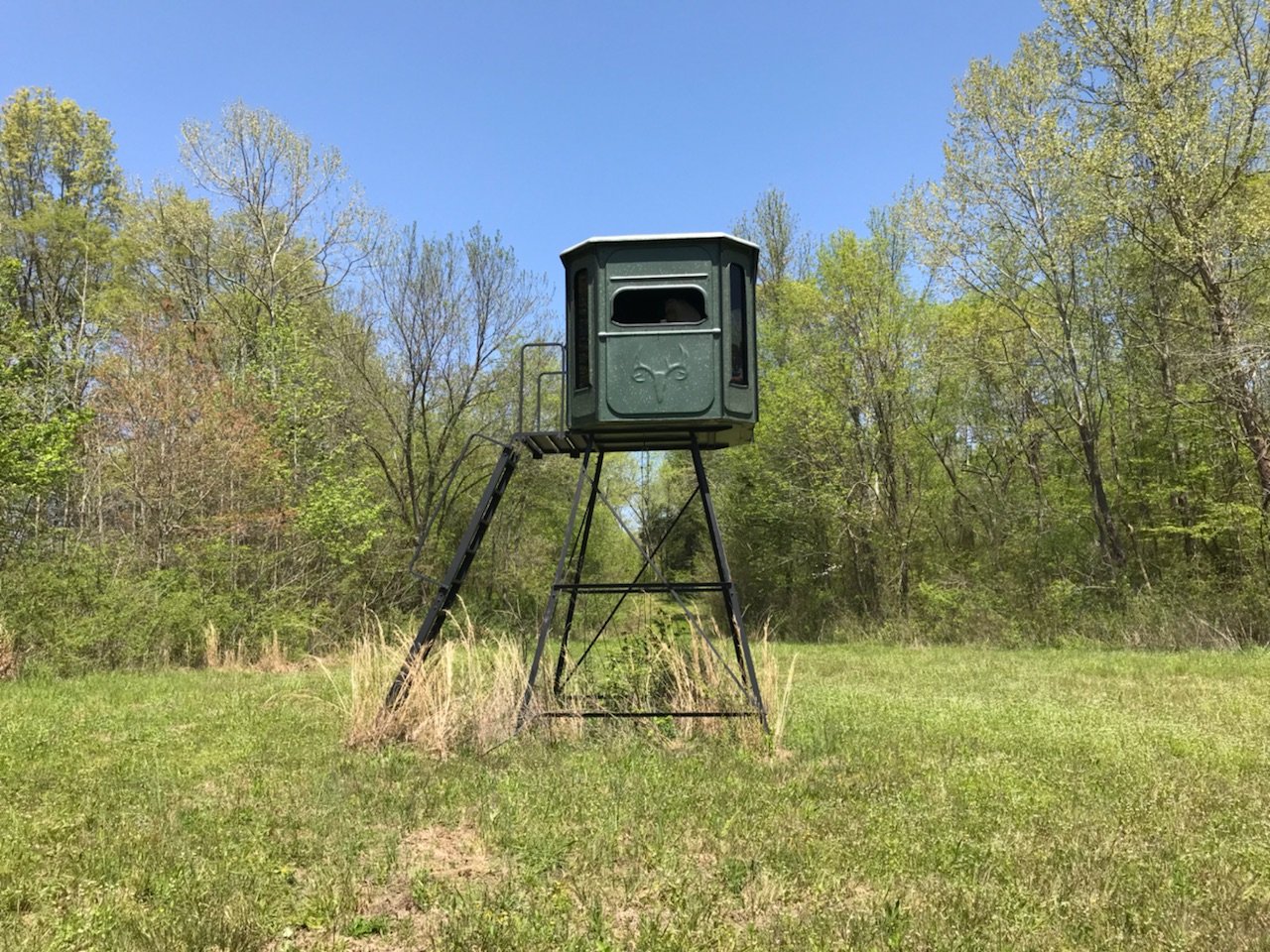
This past weekend I took Baby Meg (3.5yrs old) on her first camping trip. And boy was it memorable. For starters check out our digs:

missing

It's not a tent, and it looks an awful lot like an upscale deer blind. But no... as far as Meg is concerned, this is her "Castle in the Sky". I showed it to her in the afternoon and she was excited to find out that that night we were going to sleep in the Castle in the Sky.

Climbing Mount Maslow

In his 1943 paper, A Theory of Human Motivation, Abraham Maslow introduced a simple principle that has had a profound influence in the fields of psychology and sociology. Namely, he introduce the concept of a hierarchy of human needs which he termed Physiological, Safety, Belongingness and Love, Esteem, Self-Actualization and Self-Transcendence. And Maslow's big main point here was that it is necessary to first satisfy the basic needs before we can even have the luxury to start worrying about the higher-level concerns. But for me, looking through Maslow's hierarchy in some detail, it seems that all the cool kids hang out towards the top of that hierarchy. I've been there in the past, and am occasionally so fortunate as to touch the top of the hierarchy again from time to time. But I think that I (we) can do better than this! So I determined myself to try and devise a way to "hack" Maslow's Hierarchy so as to maximize the time I'm spending near the top.

Greetings

This is the first post of what I hope will be many posts to come. Being the first, I feel that it is import to lay out the themes that I intend to cover and the goals that I expect to achieve. However -- having not the slightest idea of what I will do with this blog, or even if I'll do anything with it at all, you'll have to be satisfied with the pretentious sounding introductory material which you are currently reading.